THESE ARE BITS FROM THE 10X ORG BOOK — A MANAGER'S GUIDE TO ELEVATING BUSINESS PERFORMANCE WITH PEOPLE AND AI.

"Org Design Drives Performance."

Learn the 10X ORG—people-centered, strategy-driven, and AI-ready organizational design system.

Powered by Org Topologies™.

"A bad system will beat a good person every time." — W. Edwards Deming
10X ORG Book Cover: A Manager's Guide to Elevating Business Performance with People and AI by Krivitsky, Larman & Flemm

By Krivitsky, Larman & Flemm

Shape Intelligence with Mandates

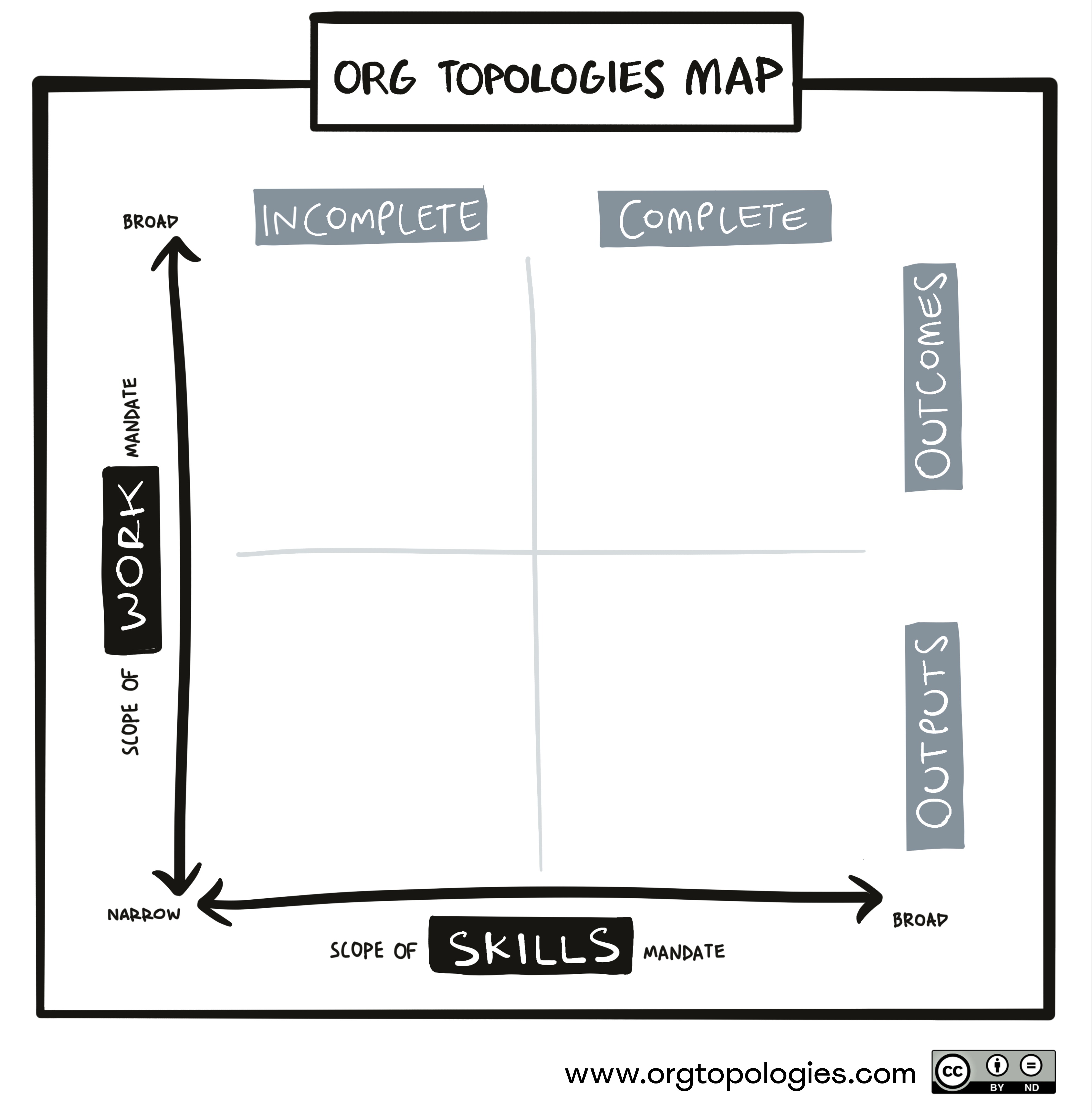
Every organizational unit carries a mandate: a bundle of authority and responsibility to decide, act, and deliver results within a defined scope.

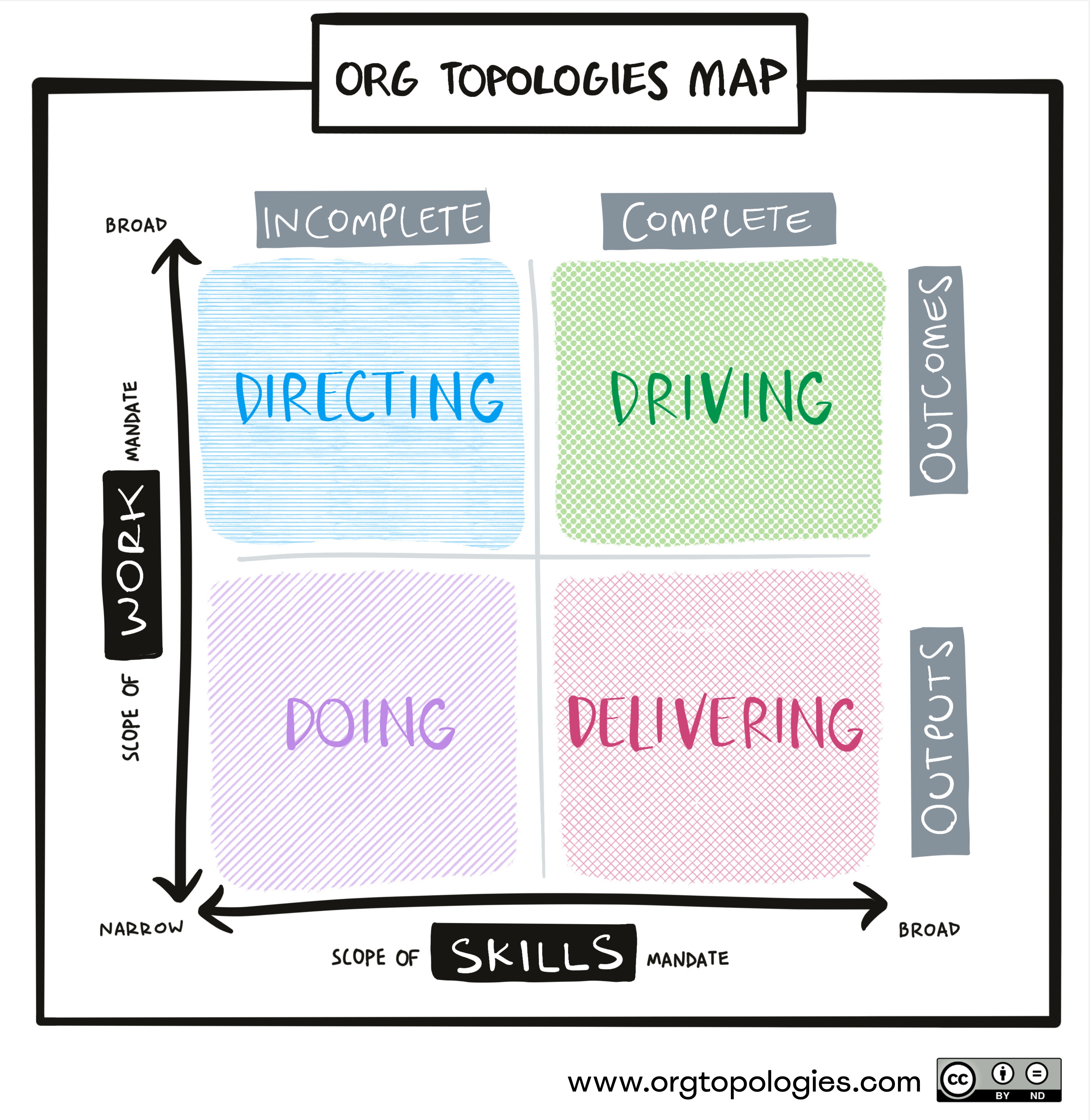
Org Topologies Map: Skills Mandate (horizontal) vs Work Mandate (vertical), showing Incomplete to Complete and Outputs to Outcomes dimensions

The Org Topologies Map

These two dimensions determine how each unit comes to life — whether this is a person, a team, an AI agent, or a temporary project group.

Together, the mandates shape the capabilities each unit is allowed to apply and the actions it is empowered to take.

If you want to improve organizational performance, influence how people behave, and eventually shape the organizational culture, adjusting these mandates is one of the most powerful activities you can undertake.

Organizational Intelligence

Combining two axes of mandates gives us four distinctive modes of organizational intelligence. Just as people can be "word smart" or "logic smart," organizations express different intelligences through their structure and mandates.

Org Topologies Map showing four intelligences: Doing (specialization), Delivering (flow), Directing (coordination), and Driving (adaptive)
Directing

Coordination Intelligence

Oversees the whole solution space with centralized control. Lacks skills to create value directly but adds value by coordinating others' work through planning and control.

Example: A business analyst who writes requirements and specifications but cannot implement or deliver the solution.
Driving

Adaptive Intelligence

Focused on owning outcomes and shaping what gets built next. Blends discovery and delivery, using real customer signals to refine both the problem and the solution.

Example: A three-person startup, or several teams functioning as a true Team-of-Teams — owning strategy, structure, coordination, and results together.
Doing

Specialization Intelligence

Highly skilled in narrow domains. Excel at precision, quality, and efficiency within well-defined boundaries. Act as deep specialists focused on defined tasks rather than outcomes.

Example: A line cook who executes recipes flawlessly yet may not design or deliver the full dining experience.
Delivering

Flow Intelligence

Creates value independently within a defined work area. Masters a complete Definition of Done, shipping results quickly while staying within defined boundaries.

Example: An e-commerce "Search Team" that ships rapid improvements within search functionality but cannot contribute to other high-priority work.

Fit for Purpose

Three common organizational topologies — each with a distinct structural shape that optimizes for a different kind of performance.

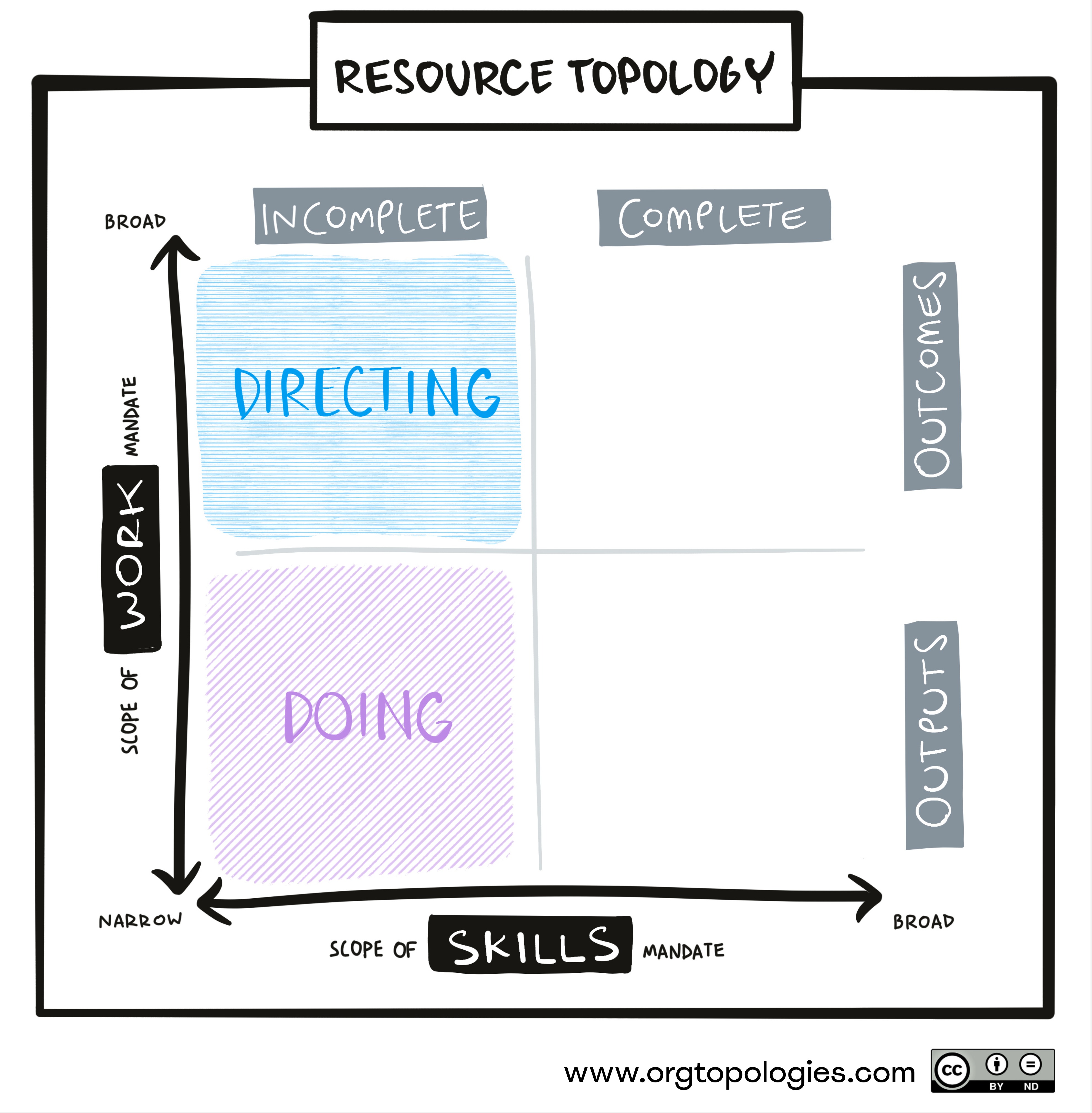
Resource Topology: Doing and Directing intelligences focused on specialization and coordination

Resource Topology

Performance through resource efficiency and deep specialization

Work is divided by function. People specialize deeply and are assigned work that fits their skills. Resource managers coordinate planning, allocation, and monitoring.

Optimizes for Utilization & Predictability
Best for Stable, process-driven environments
Trade-off Rigidity when strategy shifts
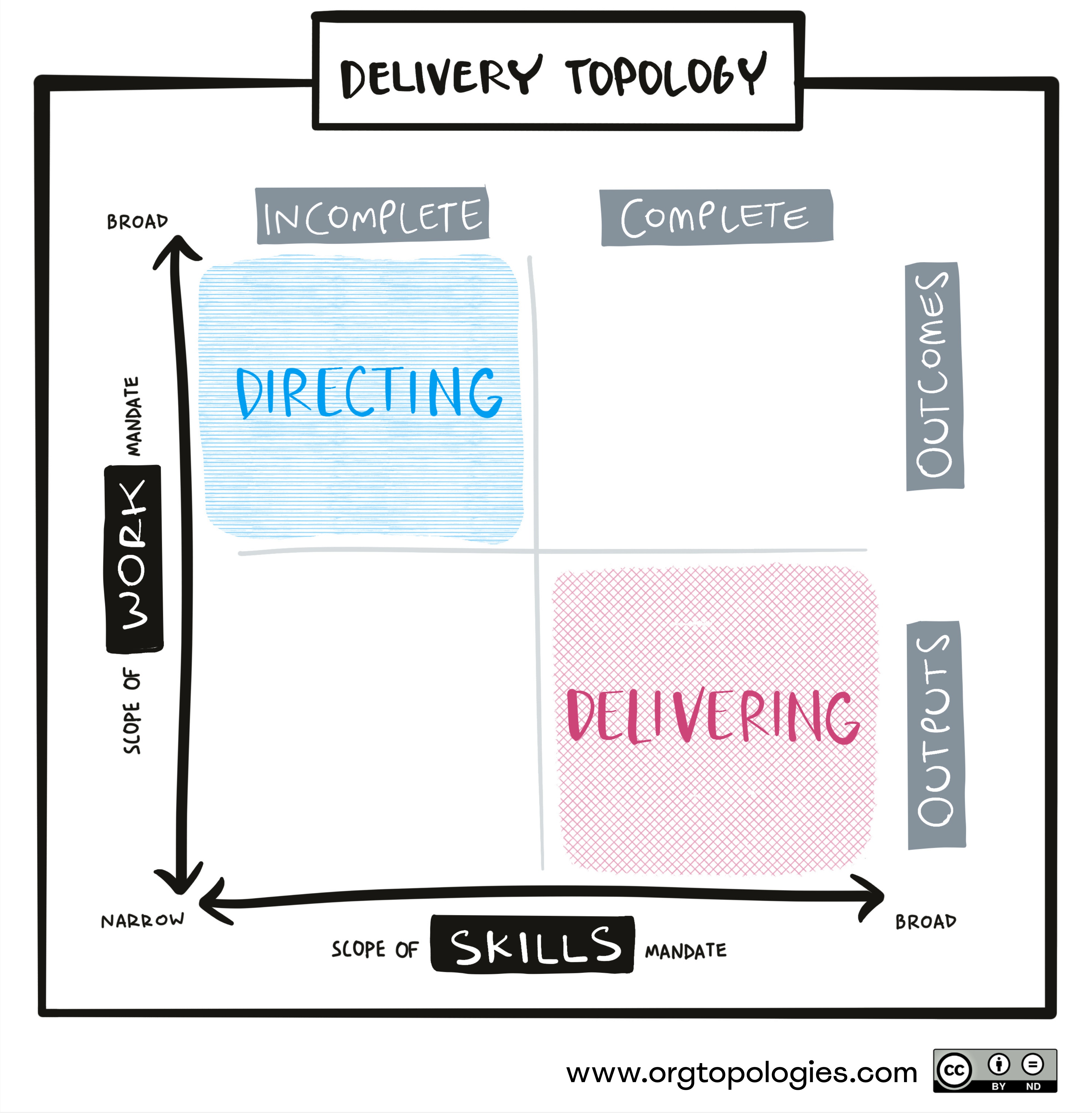
Delivery Topology: Delivering and Directing intelligences focused on flow and coordination

Delivery Topology

Performance through fast, predictable flow

Functional workers are remixed into cross-functional teams organized around specific features, product areas, or service types. Each team handles end-to-end workflows within well-defined scopes.

Optimizes for Speed & Flow within boundaries
Best for Known work that fits team structure
Trade-off Cross-cutting work still needs coordination
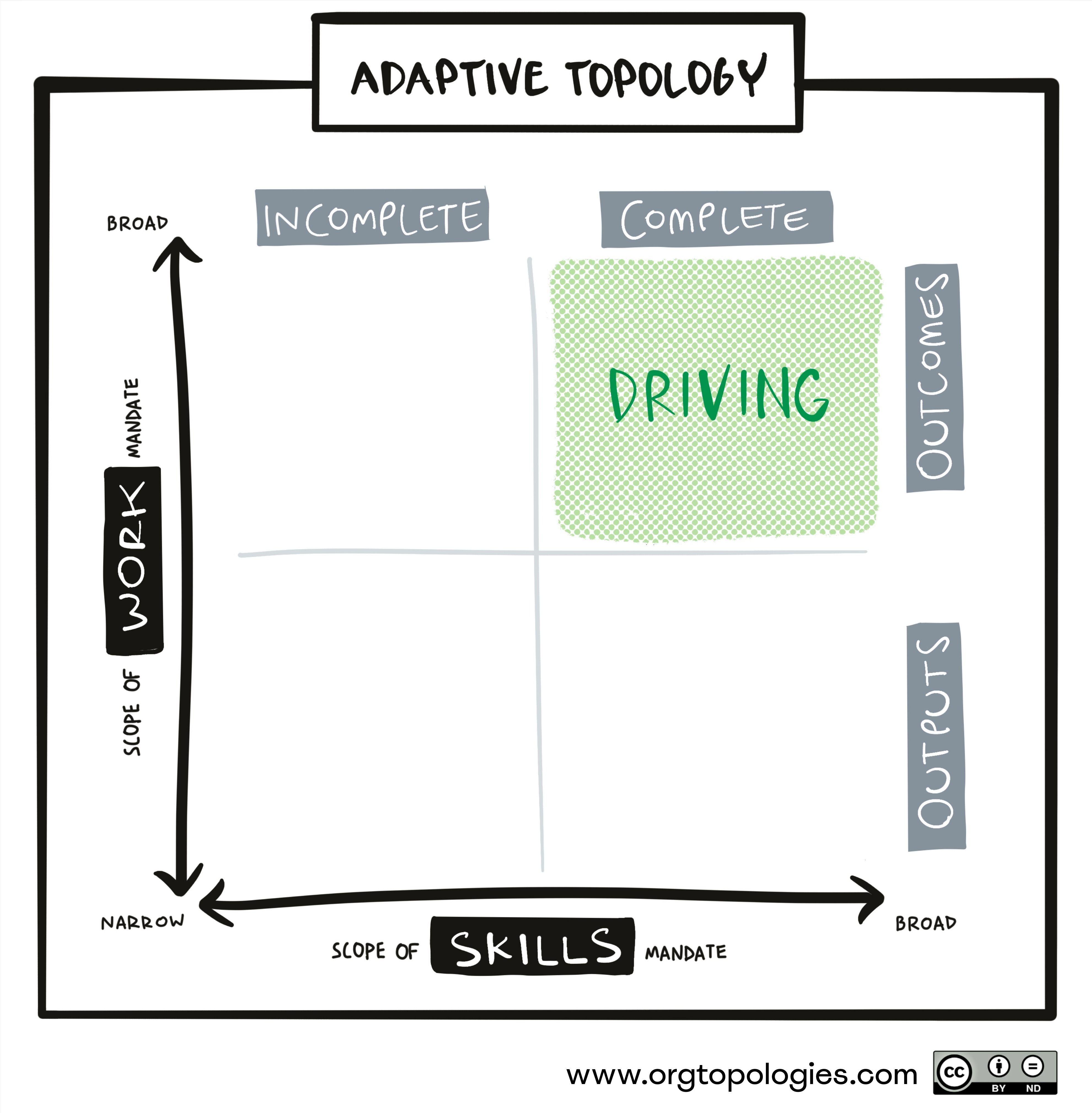
Adaptive Topology: Driving intelligence focused on outcomes and adaptability

Adaptive Topology

Performance through flexibility, innovation, and resilience

Sub-units merge into a larger networked system — a "bigger brain" — focused on solving a shared goal. Broad mandates enable high adaptability but require sustained investment in learning, transparency, and psychological safety.

Optimizes for Adaptability & Learning
Best for Volatile, innovation-driven contexts
Trade-off Challenges existing control structures

Strategic AI in Systemic Change

The rise of AI does not change the responsibility of aligning structure with strategy — but it does expand the options. Used thoughtfully, AI can strengthen an organization's intelligence. Used carelessly, it can simply amplify existing dysfunctions.

Strategic AI starts by understanding which capabilities are missing and then using AI to help build them. And that might be different for each of the organizational intelligences.

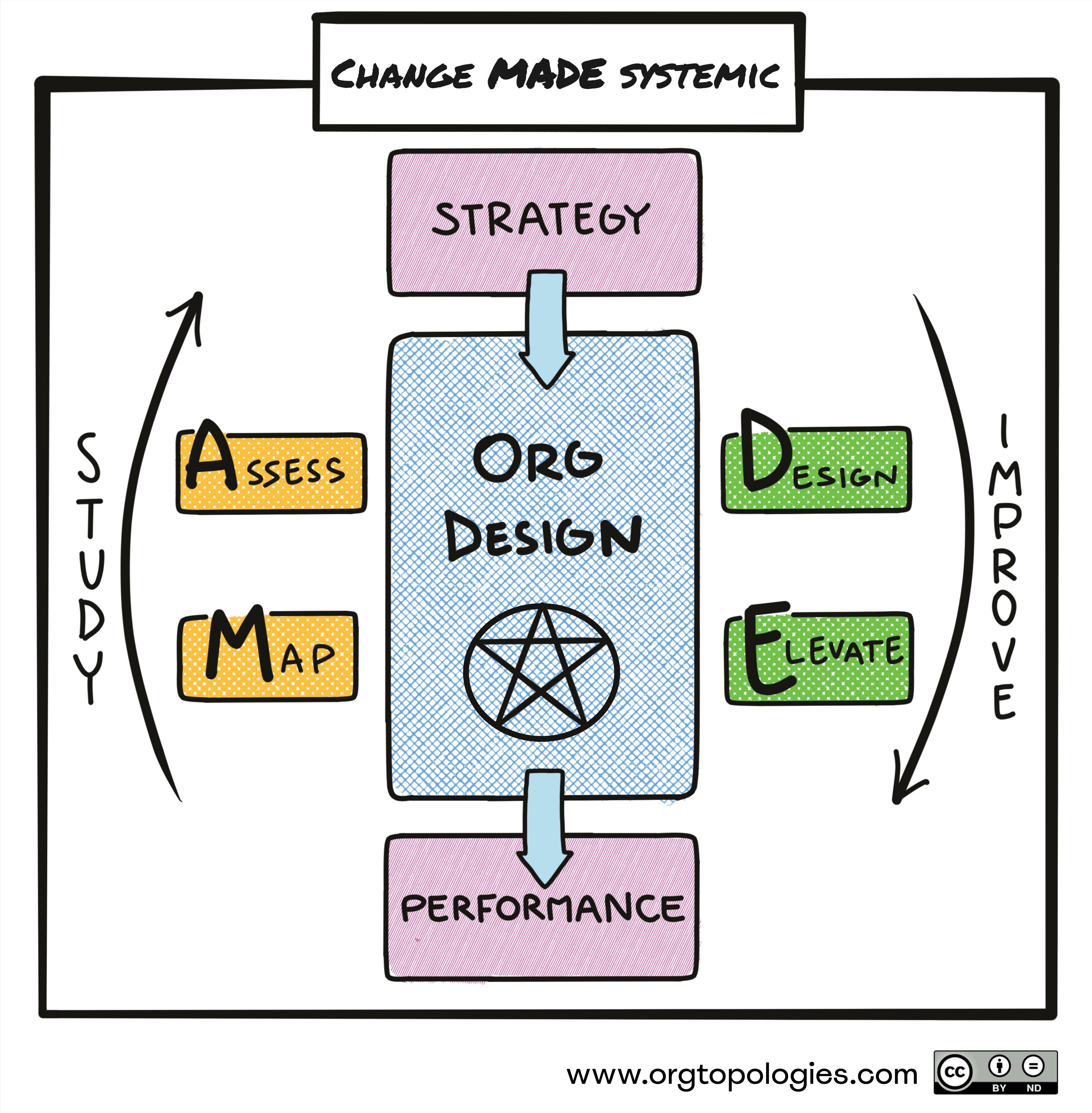
Combined with the M.A.D.E. org change loop, strategic use of AI can make the change easier and more sustainable. For instance, by lowering the costs of multi-skilling.

As we say in the 10X Org book: "First Design, Then AI." AI must come only after the organization's direction is clear.
Change M.A.D.E. Real - Map, Assess, Design, Elevate

8 Principles for 10X Performance

The 10X Org principles provide that system. They are not tactics or best practices to be cherry-picked, but a coherent design logic for organizations that can learn, adapt, and perform at 10X scale. Each principle builds on the previous ones—moving from ownership and intent, through structural choices and learning loops, toward sustained human and organizational capability in the age of AI.

1

Own, Not Rent

Sustainable improvement endures only when the organization truly owns the change.

2

Drive Performance with Org Design

Make ownership concrete through deliberate system design.

3

Shape Intelligence with Mandates

Focus change on skills and work mandates to reshape what the organization can see, learn, and act on.

4

Fit for Purpose

Replace ideology with intent. Different goals demand different structural choices.

5

Change Through a Learning Loop

The M.A.D.E. loop—Map, Assess, Design, Elevate—turns change into continuous evolution.

6

Follow the Value—Learn and Deliver

Design organizations that move toward where value is emerging.

7

Make the Org Goal Win

Protect improvements from local optimization by embedding a clear primary goal.

8

Embed Multi-Learning, Then Amplify with AI

Use AI strategically to accelerate learning and extend human capabilities to 10X potential.

Ready to Explore How to Make Org Change Lasting And Avoid Costly Reorganizations?

Discover how to shape intelligence with mandates, choose the right topology for your context, and leverage AI strategically in the full book.

Get 10X ORG Now
Get the Book